Monday, February 21, 2011

Important Cat Urinary Health Tips for your Feline Friend.


By Darlene Norris

Are you frustrated and worried about the cat urinary problems your furball is having? Is a recurring cat bladder infection becoming a serious issue?

Here are five simple ways you can help promote good cat urinary health for your feline friend.

Keeping Your Cat Healthy From The Inside Out

An excellent diet is the foundation of any health program. Most cat owners want the best for their kitties, so you should do your own research if you want to keep your cat healthy.Ever wonder why cats don't seem to drink much water? It's because they're meant to get most of their water from their food. A cat in the wild eats mice and other prey animals.
Since a mouse is over 90% water, our wild feline friend has already satisfied most of his water requirements. When we take a cat out of his natural environment and feed him a low-moisture diet of dry food, we're heading for disaster in the form of cat bladder infection. High-quality canned food has a moisture level of around 75%, which is much closer to a natural diet.

Plenty Of Water Is Essential For Good Cat Urinary Health

Even if you're feeding a canned food, it's still essential to make sure your kitty has access to plenty of fresh, clean water. It's a proven fact that the best way to prevent cat urinary problems is to keep the water going through your cat. This prevents his urine from becoming too concentrated, and flushes out toxins that can lead to cat bladder stones.

Control Cat Stress

Cat stress has been linked to feline idiopathic cystitis, which is a bladder inflammation that doesn't seem to have a cause. This condition is becoming more common in cats, and is considered to be a modern problem. Sources of stress include moving to a new home, adding a new pet or person to the household, seeing a strange animal outside, being bothered by another pet in the home, and just being an inside cat. It's very important to be on the look-out for anything that could be stressing your cat.

Exercise Is Important

We often neglect exercise for ourselves, not to mention our pets. But exercise is very important for optimum health. Not only is it good for your cat physically, but it's important mentally, as well. If your cat is bored, he's more likely to be a victim of cat stress.Provide your cat with toys to play with, and make sure you get him running around the house and out of breath at least twice a day.

Natural Feline Urinary Support Is Important

There are many natural remedies for pets on the market these days. It can be very difficult to choose the best one for your cat. Here are a few tips:

You'll want to be sure the remedy is formulated especially for pets. Some herbs are not safe for pets, or the dosage may be too high for a small animal. When you purchase a remedy made especially for pets, you'll be confident in its safety. A second requirement is that the company has been in business for many years, and has the highest reputation for producing the best-quality pet remedies. Look past the hype to find a company with years of experience in this field. The remedy needs to be easy to administer. You won't use it for long if you have to fight with your cat all the time to get it into him.

Preventing cat urinary problems is easier than treating them. Now it's time to promote cat urinary health by putting these steps into action.

Darlene Norris has combined her long-time interest in natural healing with her experience working at a vet clinic to bring you her new website, Natural Pet Urinary Health. Learn more about cat urinary health, and find the best place to buy herbal pet remedies at http://naturalpeturinaryhealth.com/

Governor Bentley Officially Proclaims 2nd Annual Alabama Week for the Animals

Animal World USA is pleased to announce that Governor Robert Bentley has officially proclaimed 2nd Alabama Week for the Animals March 5-13, 2011. The special governor-proclaimed week will highlight the importance that animals play in our lives and bring communities together on behalf of the animals throughout the great state of Alabama.

This statewide event is designed to celebrate and build awareness on behalf of all animals, as well as recognize the organizations and citizens who support them. The special week is once again bringing together educators, advocates, animal shelters, rescue organizations, sanctuaries, businesses, students, musicians, artists, community leaders, and caring citizens in an exciting week of community-building activities.
The exciting week will feature pet adoption festivals, low cost spay neuter events, feral cat initiatives, wildlife activities, educational events and a variety of life-saving community events statewide. All these events will shine the spotlight on the amazing animals, beauty and compassionate people of Alabama.
The week presents a unique opportunity to change the history for the animals by collectively coming together through goodwill. Precious lives which will be saved and communities will be transformed during this week through a wide variety of animal-related events and activities.
If you would like to learn more, please call 877-454-0807 or visit the official website. www.alabamaanimals.org/
You may also learn more about the AWUSA Weeks campaign at http://www.animalworldusa.org/

Monday, February 7, 2011

Parallel Vegan Universe(s)


Theoretical physics is catching up with science fiction—making the possibility of more ethically-advanced extra-dimensional worlds plausible.

By Mat Thomas, http://www.animalrighter.org/

Have you ever wondered whether there might be another you wandering around somewhere, perhaps on a planet much like our own but subtly or even drastically different? If so, then you may have actually created such a person in another reality simply by thinking about it!

Sound farfetched? Well, Dr. Brian Greene doesn't think so. As a bestselling author and physics professor at Columbia University, he's done the math, and says it suggests that our universe may be merely one of a potentially infinite number that exists within an ever-expanding multiverse. Of course, we can't see or visit these alternate domains (just yet, anyway) because, according to string theory, reality vibrates on at least ten or eleven mathematically-identifiable dimensions, and we Earthlings only experience three spatial dimensions (plus one of time).

Nevertheless, Professor Greene believes scientists could perhaps prove the existence of parallel universes by formulating a unifying Theory of Everything that resolves basic inconsistencies between Einsteinian relativity and quantum mechanics (thereby solving the great mystery of why matter behaves so differently on the macro and microcosmic levels).

If parallel universes were discovered, it would radically revolutionize how we understand the very nature of reality. Readers wanting a comprehensive but accessible explanation of these heady ideas should check out Dr. Greene's new book, The Hidden Reality: Parallel Universes and the Deep Laws of the Cosmos. However, what interests me most at the moment is not the nitty-gritty numbers behind string theory, but rather imagining what kinds of worlds may exist out there beyond our current ken. And, especially because Professor Greene is a vegan who stopped eating meat as a nine year old to avoid eradicating animals' existence, my mind is led to consider a grand possibility: that somewhere, on some other plane of reality, there are worlds where people don't kill animals for food or any other unnecessary reason.

Perhaps a good place to begin such a conceptual journey is with an example of a parallel universe from pop culture—specifically the classic 1967 Star Trek episode “Mirror, Mirror”* in which a malfunctioning transporter beams Captain Kirk and three Federation starship officers into an alternate world (with their doubles simultaneously materializing on the Enterprise). In this strange reality, the intrepid interstellar space explorers boldly encounter their crewmates' evil counterparts—including a stylishly goateed Mr. Spock who is still eminently logical but trapped in an irrationally cruel and ruthless reality of imperial intrigue, genocide and assassinations. Like all Vulcans, Spock (the original at least) is a pointy-eared alien who espouses non-violence and practices ethical veganism.

Meanwhile, in our reality, Leonard Nimoy, the actor who personifies the hyper-intelligent and super-strong Science Officer, is a vegetarian—probably because he was convinced by the philosophy of the fictional character he portrayed to stop eating meat, showing how even “parallel” made-up people can have tangible effects on our world.

If Spock's malevolent doppelganger is any indication of the potential differences between our universe and others populating the multiverse, then it is quite conceivable that perhaps, somewhere among the infinite possible realms, PETA president Ingrid Newkirk is CEO of McDonalds, for example, or there’s a world where sentient plant beings breed humans on factory farms for meat. Conversely, there may also be worlds where avid hunting enthusiast Ted Nugent runs a sanctuary for injured wildlife, carnivorous chef Anthony Bourdain copacetically hosts a popular vegan cooking show called Kitchen Compassion, or there’s a smartphone app that translates most known species’ languages into human speech and vice versa. Statistically and probabilistically speaking, the variegated details between alternate worlds are essentially limitless.

While we are all stuck living in just one reality (for the time being, at least), in another sense animal rights advocates already live in a parallel universe ruled by a paradigm of brute force domination over other species. That is, we exist, individually and collectively, as a universe within a universe—right alongside a vast majority of people who either don't know or don't care, for instance, that the meat they eat is actually the dead flesh of animals who were tortured on factory farms before being painfully slaughtered on mechanized assembly lines.

We see the cruelty that others remain blind to, the horror hidden in plain sight, and feel empathy for the conscious creatures who so clearly share our inherent will to live and love. And as we strive to create a kinder, gentler world, one in which innocent animals aren't victimized for pleasure and profit, perchance our thoughts and actions in this reality are not only making a difference for animals here on our planet, but also creating divergent worlds throughout the multiverse where animal exploitation is universally condemned or utterly unthinkable.

What do you think other universes might be like? Express your creative visions in the “comments” section!

* Watch the full Star Trek episode "Mirror, Mirror" online for free at cbs.com.

Monday, January 24, 2011

Top 5 Most Amazing Examples of Animal Communication

by Andrew Latham

Animals might not have a "proper" language in which to communicate, but communicate they do and in an amazing variety of ways.

Top 5, Ants.
How do you organize a collective society of thousands of members without being able to say a word? Ants have found the answer in chemical communication. Ants have from 10 to 20 chemicals in different glands of their bodies depending on the species. Depending on the chemical released ants can signal alarm, invite friends to eat from a new food source or even organize military tactics when attacking an enemy, to mention a few of the 50 standard behavior patterns that have been observed by zoologists.

One of the most curious examples of ant's chemical communication is how they recognize dead ants when they sense the oleic acid that is released when an ant's body starts to decompose. A scientist with a dark sense of humor experimented with this method of communication by dropping a spot of oleic acid on a live ant. The other ants dutifully carted away the "dead" ant, screaming and kicking, to the cemetery outside the nest and continued to do so no matter how many times the poor "undead" ant walked back.

Top 4, Elephants
Elephants communicate a wide range of emotions using "elephant talk" by a combination of sound and body language signals that range from low frequency rumblings to high frequency trumpets, roars, bellows, barks and snorts. Interestingly many of the sounds in "elephant talk" are well below the level of human hearing but are so powerful elephants can hear them from several miles away.

Elephant communication is so complex; it is difficult for researchers what to make of it. Joyce Poole is a researcher that has dedicated over 20 years to the study of "elephant talk" has witnessed greetings between elephants that have been separated for a long time that included rushing together with their heads high up while flapping their ears and even putting their trunk into one another's mouth in a way of communicating the joy of meeting after a long time. Such communication and displays of affection strengthen the social networks between elephants.

Top 3, Bees
The search for food is always at the top of conversation subjects in animals and humans alike and bees are no exception. Searching for food is serious business for bees and finding it is a complicated ritual. Once food is found it is important to communicate the exact location to the rest of the hive. This is done by an amazing form of communication based on a series of dancelike movements that inform the hive of the quality and location of the food.

How do the bees communicate this vital information? The location of the food source is indicated by the rhythm of the dance and by the orientation of the axis of the tail with respect to gravity. If the food source is near the hive, a "round" dance is performed. A "tail-wagging" dance indicates that the food source is more than 80 meters (260 feet) away. This dance transmits precise information about direction as well as distance. The number of dance cycles performed by the bee in a certain length of time is inversely related to the distance of the food source. Thus, about 10 cycles are performed every 15 seconds for a food source 100 meters (330 feet) away, but only one cycle is made in that period if the food source is 10,000 meters (33,000 feet) away.

Top 2, Lions
Although lions are not renowned for their small talk skills research has shown that they are excellent communicators. A male's mighty roar is an obvious warning that can even freeze a prey or a male rival in its tracks. But lions are not all about killing, they are social cats, they will also roar just to keep in touch with the other members of the pride. This type of roar is softer and less assertive. One researcher reported a lion that was heard roaring every 15 minutes until his cousin answered. The chit chat continued for over 15 minutes until they finally met up to hang out, after which the roaring stopped.

Top 1, Plants talking to Animals
I know, plants are not animals but they still deserve Top 1. You will not believe how some plants display amazing skills communication with other plants and even animals in order to save their necks, or should I say stalks.

Lima bean plants, for instance, will release a chemical distress signal when attacked by spider mites that attracts other mites that enjoy feeding on spider mites.

Similarly, corn, tobacco and cotton plants when invaded by caterpillars will segregate airborne chemicals that attract wasps, a sworn enemy of caterpillars. This form of communication is not just a case of saying I am hurt, or hungry, or where to find food, it is a fabulously complex system that allows plants to call for the right type of help when needed and even warn other plants. For example, willow, poplar, alder and birch trees when attacked by caterpillars, fungus or powdery mildew will send out chemicals to jump start the defense systems of other undamaged plants.

Learn more from Andrew Latham at website http://ezinearticles.com/?expert=Andrew_Latham#more-information

Wednesday, January 19, 2011

I Need a Hero


by Randi Bildner, Founder of The Bully Beat

It's 1995; I sit in the stands of Yankee Stadium and close my eyes. I listen carefully as the umpire shouts the familiar words "Play Ball!" As I allow this term to penetrate my being it's not hard to imagine 1958, "the good ol' days," a time when players and fans alike came together simply for the love of the game.

Taking in the true essence of "The House That Ruth Built" I can almost hear this benchmark term echo throughout stadiums across America. This tradition, signaling the start of "America's favorite pastime" has not changed but everything else has. Sadly this reality encompasses all sports and any realm that potentially lends itself to the birth of a hero. Looking around, things seem familiar, comfortable, good; families gather for an evening to watch their "heroes" take the stage.

Upon closer inspection something, everything has changed; for now, it is 2011, a lifetime away from the world the baseball players of 1958 knew when they graced these "sacred" grounds.

Looking back at a baseball roster for 1958, the names hit hard like the crack of the bat when Boston's Ted Williams hit the 17th grand slam of his career. Heroes one and all were playing for what would now be considered meager salaries. Their true wealth was their legacy— for these are the names that will live in our hearts forever.

Sadly, I understand those days of fun and innocence are long gone. Today's athletes play their respective sports very well (both figuratively and literally) causing a direct impact on the nature of these games and how we choose our heroes.

Once upon a time, a hero earned his or her title. Back then we too thrived as individuals and as a culture. Today with the collapse of morality, when our president personally phones Jeffrey Lurie (owner of the Philadelphia Eagles) to congratulate him on giving convicted dogfighter Michael Vick "… a fair second chance," we find ourselves in a sorry state and it's time to rework "humanity's code of ethics." Those who choose to forget Vick's actions mirror who and where we are in today's world.

Children lacking proper role models suffer from the inability to know right from wrong (particularly while their parents sit in the stands and cheer for criminals).

In April 2007, Michael Vick was implicated in an illegal interstate dogfighting ring that had operated for over five years. In August 2007, he pleaded guilty to federal felony charges and served 21 months in prison. Court documents show Vick personally participated in killing dogs; some were hanged, some were drowned, some beaten to death (their bodies slammed against cold concrete floors breaking their backs) and some were electrocuted.

This is not the simple thuggery that so many of Vick's peers (and their fans) consider to be part of the normal trappings of today's sports culture. Nor is it the occasional sensationalized celebrity misdeed over which we secretly thrill. These casual, habitual and routine brutalities would brand the average person insane.

"Murder is unique in that it abolishes the party it injures, so that society has to take the place of the victim and on his behalf demand atonement or grant forgiveness; it is the one crime in which society has a direct interest." ~W.H. Auden

My question: Why should a society be allowed to grant forgiveness on behalf of the murdered? HOW a society can forgive reprehensible actions where the victims are so pure, so innocent and the crime is so heinous is unfathomable?

Our society is divided when it comes to forgiving Michael Vick. WHY?remains a mystery to those who abhor Vick's actions at Bad Newz Kennels—Vick's personal "house of (canine) horrors".

While it is quite obvious that forgiveness comes easy for those whose conscience has been replaced by "big bucks," it remains perplexing how others not only forgive but heroicize a member of a deviant subculture whose mental constitution is the makeup of a sociopath.

According to actress and comedian Whoopi Goldberg, Vick should be forgiven because of his "culture." Ms. Goldberg defended Vick on the television show The View stating; "From where he comes from (in the South U.S.) dogfighting is not that unusual. For many people, dogs are sport." Goldberg continued, "There are certain things that are indicative to certain parts of our country." Goldberg surmised Vick's actions were a result of the mindset behind those he encountered while growing up.

Flash Forward… Vick had been playing for the Atlanta Falcons for six seasons before he was caught and admitted to federal criminal charges. It was during this time (while employed by the NFL) that Vick decided to moonlight as a dogfighter. The fact that he traveled in "certain" circles and lived "the life," (Vick's culture had drastically changed) could be one retort to Ms. Goldberg's ill-thought remark; another, stating culture to be the cause for a person to act as a deviant is not only a cop-out but is insulting.

Some acts can be forgiven and some not. Recently, Oprah Winfrey interviewed Dr. William Petit. Winfrey asked Petit if he could forgive the men who brutally tortured and murdered his entire family, setting his house on fire (while he lie on the basement floor unconscious). Waiting for Petit's answer, I silently repeated, "NO, please, do not let him forgive." I wanted to cheer when this husband and father of two stated a firm "NO" in response to Oprah's question.

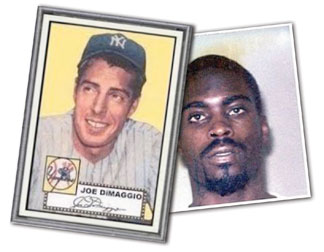
In this day and age when an actress can gain notoriety through sexting, when the distinction between heroes and criminals are virtually non-existent, when deviants get to play a game for millions of dollars, when our nation's eyes are truly lonelier than ever (collectively we might wonder) "Where have you gone Joe DiMaggio….?"

Please visit Randi Bildner's wonderful website The Bully Beat
http://www.thebullybeat.org/

© The Bully Beat and Randi Gerzofsky Bildner. All Rights Reserved.

Tuesday, January 11, 2011

3rd Annual Florida Week for the Animals February 5-13, 2011

Florida Week for the Animals highlights the importance that animals play in our lives and bring communities together on behalf of the animals throughout the great state of Florida.

Animal World USA is pleased to announce that the 3rd Annual Florida Week for the Animals is scheduled for February 5-13, 2011. The special governor-proclaimed week will highlight the importance that animals play in our lives and bring communities together on behalf of the animals.

This statewide event is designed to celebrate and build awareness on behalf of all animals, as well as recognize the organizations and citizens who support them. The Florida Week for the Animals is once again bringing together educators, advocates, animal shelters, rescue organizations, sanctuaries, businesses, students, musicians, artists, community leaders, and caring citizens in an exciting week of community-building activities.
The exciting week will feature pet adoption festivals, wildlife activities, educational events and exciting variety of community events statewide. All these events will shine the spotlight on the amazing animals, beauty and people of Florida.
The week presents a unique opportunity to change the history for the animals by collectively coming together through all our goodwill. The official website with the amazing calendar of events is is http://www.floridaanimals.org/

Precious lives which will be saved and communities will be transformed during this week through a wide variety of events and activities.
If you would like to learn more or become involved, please call 877-454-0807 and/or visit the official website for complete contact information. You may also learn more about the Animal World USA Weeks campaign at http://www.animalworldusa.org/

Friday, December 17, 2010

1st India Weeks for the Animals Coming 14-31 January 2011!

(Washington, DC) Animal World USA-International is excited to announce the 1st India Weeks for the Animals will be held 14-31 January 2011. These special weeks, which will highlight the importance that animals play in all our lives, will also underscore the work being done for the animals throughout the country of India and provide a platform on ways we can help them.

This series of events in India is designed to celebrate the people and animals, as well as recognize the monumental, life-saving work being done in India. 1st India Weeks for the Animals will bring together sanctuaries, rescue organizations, businesses, students, musicians, artists, educators, community leaders, and caring citizens in exciting awareness-building and animal protection activities.

The weeks will feature sanctuary fundraisers, low cost spay and neuter/vaccination events, adoption programs, conferences, vegetarian events, volunteer activities with animals, wildlife events, musical events and so much more! All these events will shine the spotlight on the amazing animals and compassionate people of India who love them.

New relationships will be built with the variety of animal-related activities and events. Together we we can help shine the spotlight on the gracious people of India, precious animals and build wonderful new lifelong friendships during this time.

If you would like to learn more, be involved or schedule an event(s) or fundraiser, please visit the official website at http://indiaanimals.org/

Learn more about Animal World USA-International Weeks for the Animals at http://www.animalworldusa.org/